Table of Contents
How To Prevent Altitude Sickness: The Ultimate Guide for High-Altitude Treks
The mountains are calling, and you are prepared to conquer those towering peaks. As you trek to Everest Base Camp, explore Ladakh, or head up the Rocky Mountains, there’s one invisible party pooper you need to prepare for: acute mountain sickness (AMS).
Thinking about how to prevent altitude sickness from ruining your dream adventure? You’re in the right place. Altitude sickness can affect anyone, regardless of your fitness level, age or gender. Fortunately, it is entirely preventable with proper preparation and pacing.
In this guide we’ll go over exactly how to avoid altitude sickness with tried and true acclimatization rules, natural remedies and medical interventions.
What is Altitude Sickness?
It helps to know what is happening to your body before you can start to prevent. The higher you go above sea level, the lower the barometric pressure . This means the air molecules are more spread out, and there are fewer molecules of oxygen in each breath you take.
If your body doesn’t get enough oxygen quickly enough, you’ll have symptoms like headaches, nausea, dizziness, fatigue, and shortness of breath.
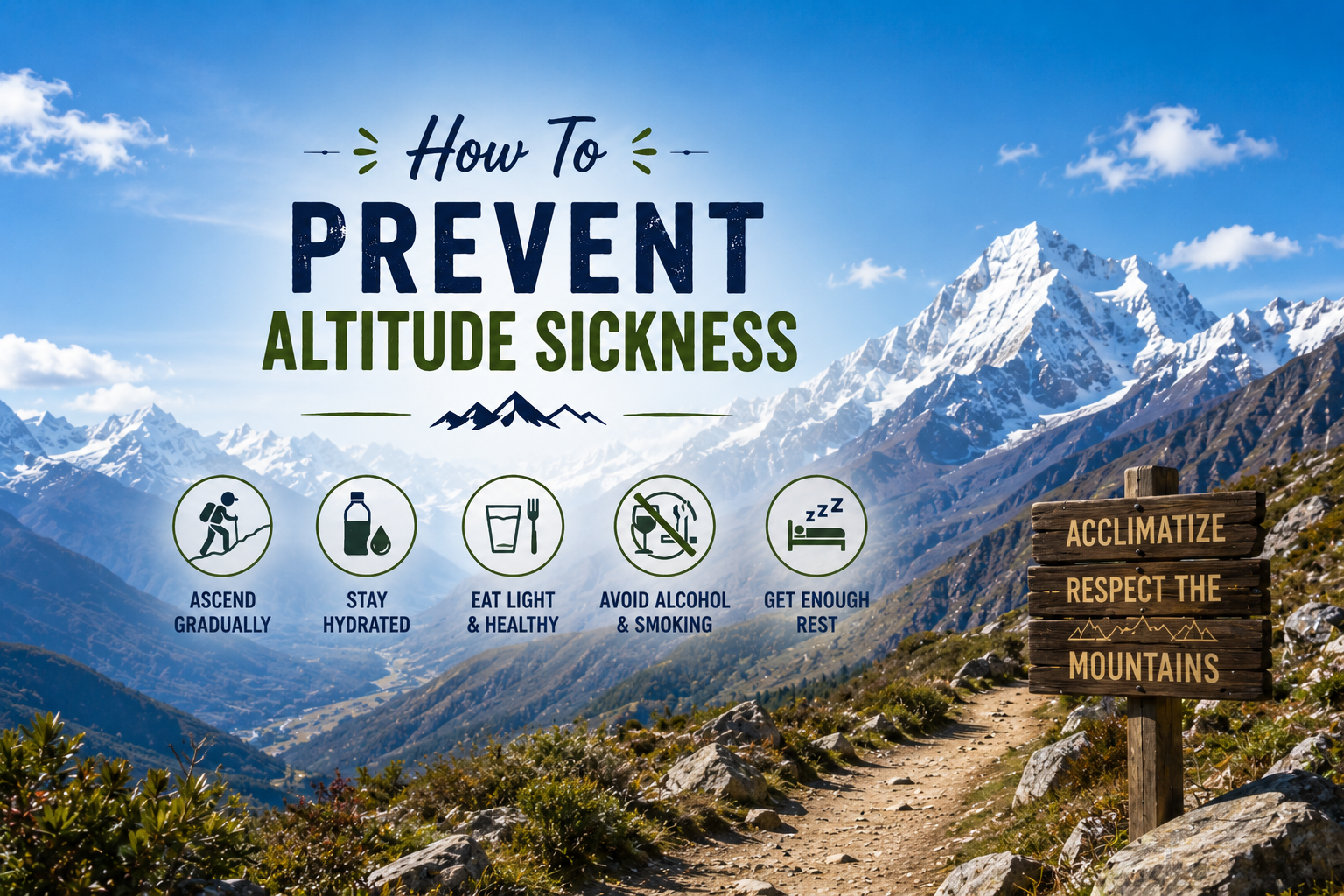
5 Golden Rules on How to Prevent Altitude Sickness
The philosophy of preventing AMS is simple: allow your body to adapt to its new surroundings over time. Here are the rules for a safe ascent that are non-negotiable.
- Sleep low, climb high (SLCH)
This is the golden rule of mountain climbing. If you’re trekking during the day, it’s perfectly fine to hike to a higher altitude but you should always drop - Go Slow (The 1,000-Foot Rule)
Speed is your enemy when it comes to high-altitude travel. If you’re going above 10,000 feet (3,000 meters), try to keep your daily rate of ascent to 1,000 to 1,500 feet a day. Add in a full day of rest for every 3,000 feet of climbing. - Drink Water Like Champ
In thinner air your body loses moisture much faster through respiration and sweat. Dehydration is both a mimic and an exacerbator of AMS. Try to drink 4 to 5 liters of water every day. Add electrolyte powders to your water to keep your sodium and potassium levels just right. - Alter Your Diet
Your body works super hard at high altitudes just to keep you going. Feed it with easily digestible carbohydrate rich foods (oats, pasta, rice, potatoes). Carbohydrates are metabolized by your body using less oxygen than proteins and fats, making them the ideal energy source. - Say No to Alcohol & Tabacco
Drugs that depress respiration include alcohol, sleeping pills and tobacco . They slow your breathing rate, so less oxygen enters your lungs at a time when you so desperately need more. Avoid these completely for 48 hours prior to and during your trek.
Medications and Natural Remedies for AMS
But if you’re looking for an extra layer of protection, there are medical and natural options you can explore.
Preventive Medication
- Acetazolamide (Diamox): This is a prescription drug that causes your kidneys to excrete bicarbonate and acidifies the blood. This metabolic state misleads your brain into breathing faster and deeper, accelerating the natural acclimatization process. Ask your doctor if Diamox is right for you before you go.
Natural Remedies
- Garlic: lots of local Himalayan mountain guides swear by chewing raw garlic cloves or drinking garlic soup. It is thought to thin the blood and increase blood flow.
- Ginger Tea: Great for combating the nausea and dizziness of mild altitude sickness.
- Coca Leaves / Ginkgo Biloba: Chewing coca leaves is a traditional way of increasing oxygen absorption in the Andes.
- When to Stop and Go Down
Knowing how to avoid altitude sickness also means knowing when to admit that your body is struggling.
When to Stop and Descend
To know how to prevent altitude sickness, you must also know your limits. If you feel mild symptoms of AMS – do not go any higher. If you begin to feel these symptoms escalate to include severe headaches, a constant cough, confusion, or lack of coordination (indicators of HAPE or HACE that could be potentially lethal), then it is mandatory that you come back down immediately. No mountain summit is worth your life!
Final Thoughts
The key to having an amazing trekking experience on the mountains is not about physical capabilities alone – it all comes down to your patience and understanding that by taking your time to ascend at a comfortable pace, drinking lots of fluids, and listening to your body, you will have both a memorable and safe trek. Therefore, pack smart, follow these instructions and enjoy the scenery!